

It’s a question many professionals exposed to everyday risks often ask. Still unsure? This article is for you.
Leather safety footwear remains a benchmark in the world of personal protective equipment.
So, what are the real advantages of leather? In which working environments is it especially recommended? And how can you take care of your shoes to extend their lifespan?
We cover it all in this article.
Leather for your safety footwear
What is leather ?
Leather is a natural material made from animal hide through a process called tanning.
But before exploring the qualities of leather, it’s important to understand its structure.
An animal hide is made up of several layers:
The epidermis – a thin outer layer, often removed during processing
The upper dermis, also known as the grain, the dense and durable part of the hide
The lower dermis, also called the flesh side, softer and less resistant
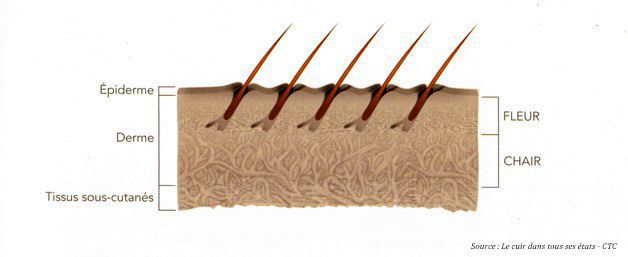
Tanning makes the hide rot-proof, strong, and durable. Depending on the part of the hide used and the treatments applied, leather can have different appearances and properties.
In the field of safety footwear, various types of leather are used: full-grain leather, split leather, suede leather, and more.
Each finish has its own look, texture, and specific properties — but they all share some common characteristics.
The natural properties of leather
- Abrasion resistance : Leather is highly resistant to friction, making it an ideal material for demanding environments.
- Breathability: Unlike some synthetic materials, leather allows the foot to breathe while naturally regulating moisture.
- Thermal comfort: It offers protection from the cold while remaining comfortable to wear in summer.
- Flexibility: Leather becomes more supple over time and gradually adapts to the shape of the foot for a personalized fit.
The advantages of leather for safety footwear
1. Excellent wear reistance
Leather is a naturally tough material. Thanks to its dense fibrous structure, it offers high resistance to abrasion, tearing, and external damage.
For professionals working in harsh environments (heavy industry, construction, logistics, etc.), this durability is a major asset.
2. A breathable material
Contrary to popular belief, leather allows the foot to breathe. It naturally regulates moisture, helping reduce excessive perspiration—even after several hours of wear. A real benefit for comfort and hygiene.
3. Natural comfort
Supple and able to adapt to the shape of the foot over time, leather provides outstanding wearing comfort. It gradually molds to the foot, making it more pleasant to wear day after day. This is a real advantage for workers who spend all day in their shoes.
4. Better heat resistance
Leather provides better thermal insulation than many textiles. When exposed to high temperatures (welding, outdoor work in summer, etc.), it offers greater protection for the foot. It’s also less sensitive to sparks or hot splashes.
Which type of leather should you choose for your safety footwear ?
There are different types of leather used in the manufacturing of safety footwear, each with its own properties. Let’s take a quick look ⤵️
Nubuck leather
Nubuck is a type of full-grain leather that has been lightly sanded on the grain side to give it a soft, velvety texture.
It offers:
A premium look and feel
Good breathability
Solid resistance to wear
Lemaitre Safety model in nubuck leather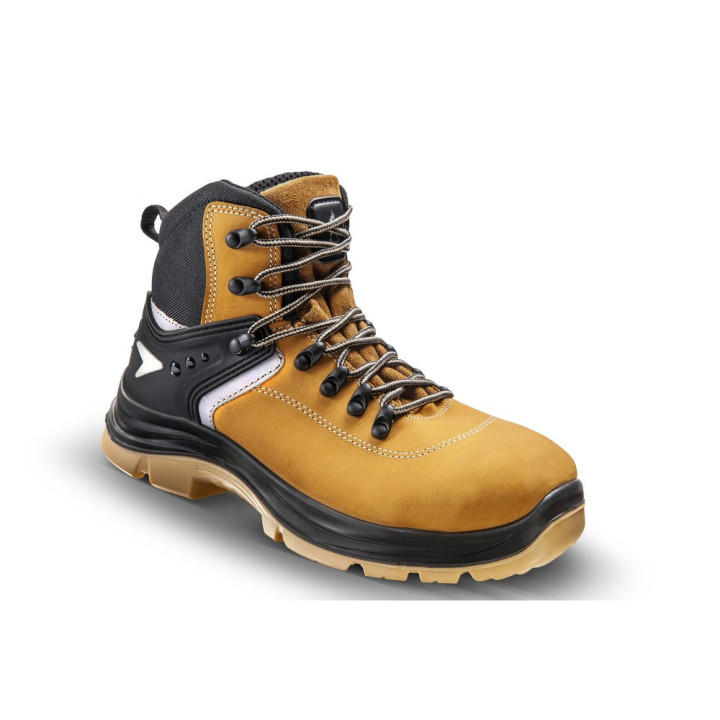
→ The MAKAN S3L model is high-cut safety shoe with a reinforced collar, made from water-repellent nubuck leather.
→ Slip-resistant outsole for slippery surfaces, excellent grip on ladder rungs, and optimal ankle support.
→ Ideal for those looking for comfort, style, and safety.
Split leather
Taken from the inner layers of the hide, split leather is considered less premium than grain or nubuck leather, but it remains a very good option for professional use. It offers solid durability at a more affordable price point.
Advantages of split leather for safety footwear
- Good value for money
- Ideal durability for professional use
Lemaitre Safety model in split leather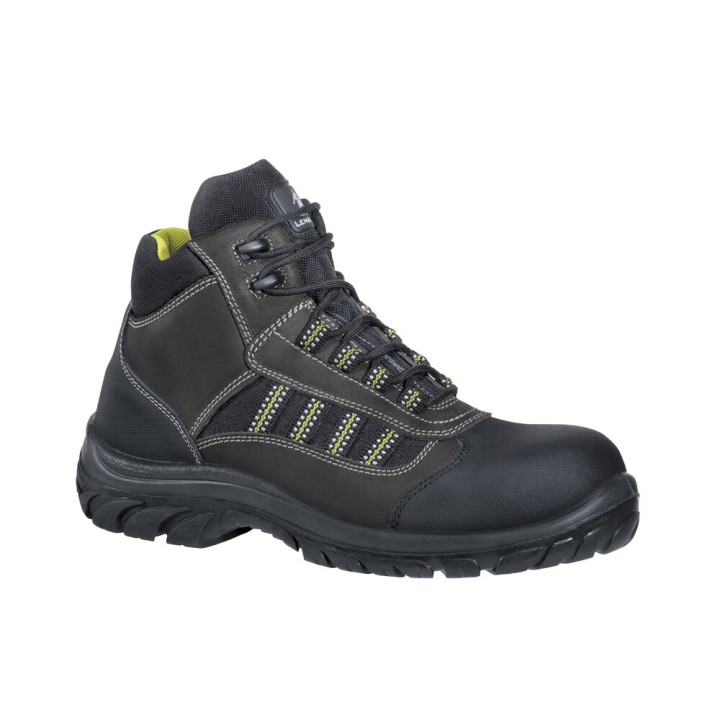
→ It's the affordable water-repellent S3 safety shoe, available in larger sizes up to size 50.
→ Perfect for everyday, multi-purpose needs—without compromising on protection.
Smooth leather
Easily recognizable by its uniform surface, smooth leather stands out for its clean look and easy maintenance. It’s perfectly suited for dusty, greasy, or dirty work environments.
Advantages of smooth leather
- Easy to clean – ideal for messy environments
- Long-lasting durability
- Natural and elegant finish
Lemaitre Safety model in smooth leather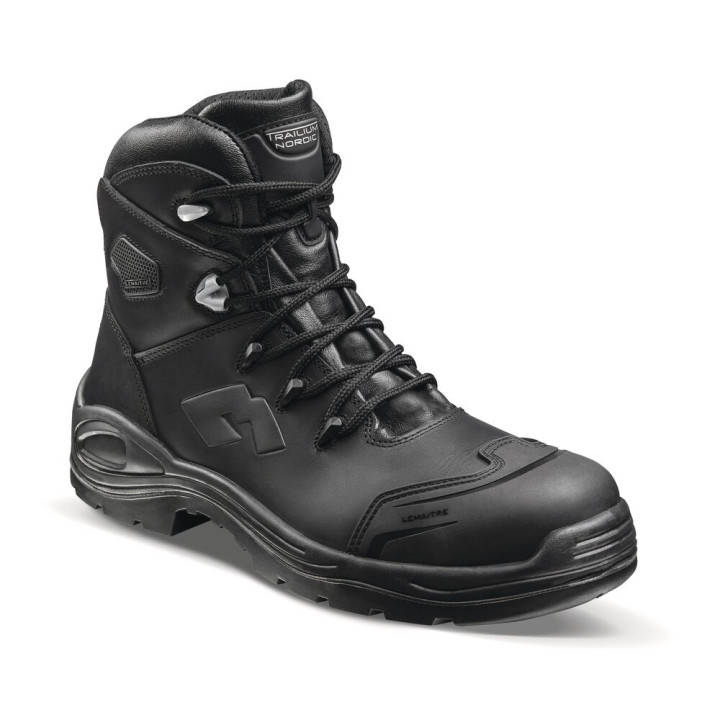
→ High-cut shoe with injected TPU overcap, ideal for slippery or muddy environments.
→ Enhanced stability thanks to a sole designed to maximize grip.
→ Also available in a low-cut version (FORSETI S3).
Water-repellent leather
Leather can be treated to become water-repellent, regardless of its type (smooth, nubuck, or split). This treatment makes it resistant to splashes, moisture, and rain, while maintaining its breathability.
Advantages of water-repellent leather
- Perfect for outdoor or wet environments
- Protects the leather without compromising breathability
- Can be combined with a waterproof-breathable membrane for optimal comfort
Lemaitre Safety model in water-repellent leather
→ Safety boot with waterproof design to keep your feet dry, even in extremely wet conditions.
→ Reinforced anti-abrasion toecap, anatomical and antibacterial insole — ideal for intensive use.
→ WR certified for enhanced water resistance.
In short, your choice of leather depends on your priorities: looks, flexibility, price, or moisture resistance!
Which professions favor leather safety footwear?
Leather is particularly well-suited for demanding environments. It is therefore often favored in the following sectors:
- Construction: variable weather conditions, rough terrain, intense physical demands.
- Industry: exposure to splashes, contact with abrasive materials, dry or humid environments.
- Logistics / Handling: need for comfort, wear resistance, and foot support.
- Maintenance and Technical Services: unpredictable conditions, frequent movement.
- Agriculture / Landscaping: protection from moisture, impacts, and harsh environments.
In all these cases, leather safety footwear offers an excellent balance of durability, comfort, and longevity.
How to care for your leather safety footwear?
To ensure your leather safety footwear lasts over time, proper care is essential. Here are a few best practices:
1. Regular cleaning
→ Remove mud and dirt after each workday.
→ Use a damp cloth or a soft brush.
→ Avoid harsh products that could dry out the leather.
2. Conditioning
Apply a nourishing cream or neutral shoe polish every 2 to 3 weeks to keep the leather supple, prevent cracking, and maintain the original look of the shoe.
3. Drying
Never dry your leather safety footwear directly in the sun or on a radiator. Instead, let them air dry naturally, using newspaper inside to absorb moisture.
4. Storage
Store your shoes in a dry, well-ventilated place on a daily basis.
Conclusion
Whether you work in construction, industry, or logistics, leather safety footwear remains a reliable choice. Robust, comfortable, breathable, and durable, it adapts to a wide range of demanding environments.
Looking for a leather model that fits your needs?
Explore our selection of leather safety footwear.